Government has inaugurated the Joint Cyber Security Committee (JCC) to coordinate national defence against cyber threats.
The JCC brings together representatives from across all security and intelligence sectors to collaborate closely with the Cyber Security Authority.
This is the first time the committee is being established under the Cyber Security Act 2020, Act 1038.
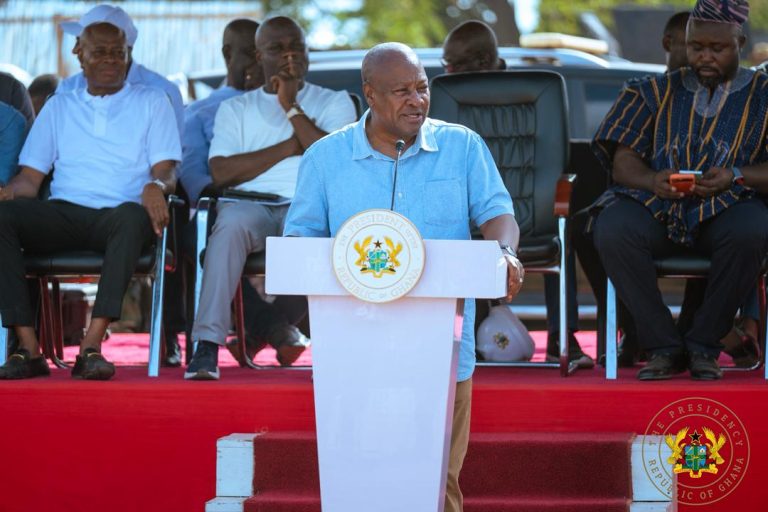
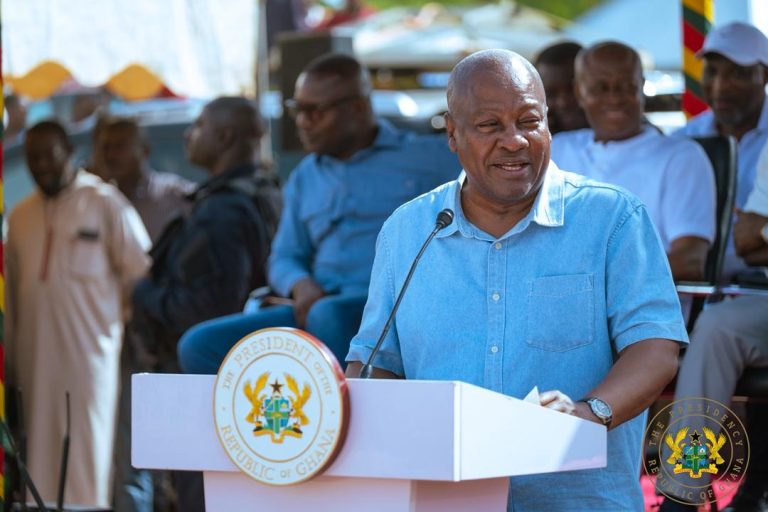
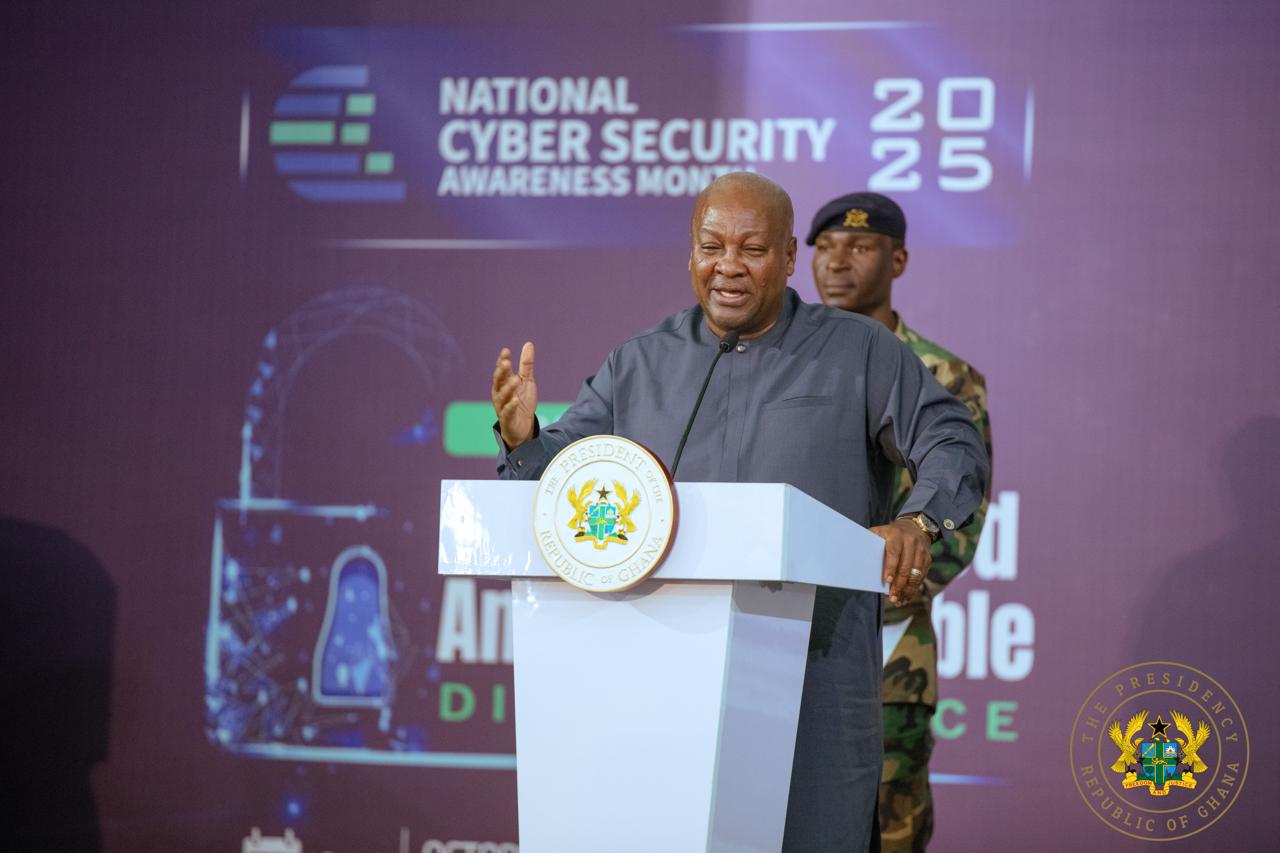
Speaking at the launch of the 2025 National Cyber Security Awareness Programme on Wednesday, President John Dramani Mahama said the purpose of the committee is to ensure coherence, coordination and proactive measures in national defence against cyber threats.
“This is a vital step. Cyber security must not be fragmented and demands unity of purpose, a clear strategy and disciplined education,” he said.
The President explained that cyber threats today are more complex and more dangerous than ever before.
“They are borderless, they are invisible until it’s too late and they evolve every day,” he said.
President Mahama cited recent studies that show the seriousness of cyber threats globally.
The International Monetary Fund’s April 2024 Global Financial Stability Report revealed that over the past two decades 20 percent of all reported cyber incidents worldwide have targeted the financial sector, resulting in direct losses exceeding 12 billion dollars.
“Since 2020 alone, cyber-related losses are estimated to be over 2.5 billion dollars. These are staggering figures. They reflect not just lost money, but lost trust, lost jobs and in some cases lost lives,” he said.
The President noted that Ghana is not immune to cyber threats.
“We too have encountered cyber fraud cases, phishing attacks, identity theft and other digital crimes that harm individuals and businesses alike. As we expand digital public services and mobile money usage, we must reinforce the systems that safeguard them,” he said.
President Mahama said under the Reset Ghana agenda his administration has made digital transformation a key part of national development policy with cyber security at the core of that transformation.
“When I took office in January this year, I promised the Ghanaian people that we will develop a modern, inclusive and secure digital economy. That promise continues to guide my work today,” he said.
The President emphasized that policies and programmes alone are not sufficient. “Institutions are important and that is why in accordance with the Cyber Security Act 2020, Act 1038, I’ll today inaugurate the Joint Cyber Security Committee,” he said.
He added that cyber crime ignores borders. “A hacker in one country can breach systems halfway across the world within seconds and that is why Ghana cannot act alone. We must collaborate with the rest of the world,” he said.
President Mahama announced that in October Ghana will ratify and sign the United Nations Convention on Cyber Crime.
“This treaty equips us with new tools to investigate attacks, prosecute cyber criminals and protect critical information infrastructure,” he said.
He noted that Ghana has led efforts to include provisions against online child sexual exploitation and has emphasized the importance of applying international human rights law in cyberspace.
The President said all efforts will fail if citizens are not informed and vigilant.
“The truth is simple and straightforward. Our citizens are our first line of defence,” he added.
“Cyber security is everyone’s business. Our duty as governments is to provide clear policies, strong institutions and enforcement. The private sector’s duty must invest in cyber resilience and protect consumers’ data. Civil society must advocate responsibly, educating and holding governments and institutions accountable.
“And for our citizens, they must stay informed and alert on every occasion,” he noted.
President Mahama declared that if Ghana acts wisely, decisively and inclusively the country can be a continental leader in secure digital innovation.
“Digitalisation without security is unsustainable. Innovation without responsibility is dangerous. An opportunity without inclusion is unjust,” he said.
Richard Aniagyei, ISD