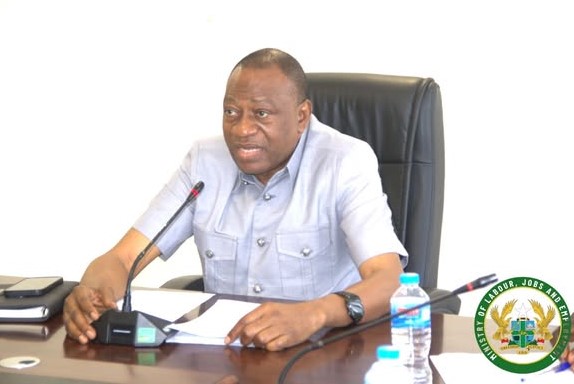
The Minister for Labour, Jobs and Employment, Dr Abdul Rashid Hassan Pelpuo, has affirmed the government’s unwavering dedication to cultivating a skilled, competitive, and future-ready workforce to drive Ghana’s transition to a green economy.
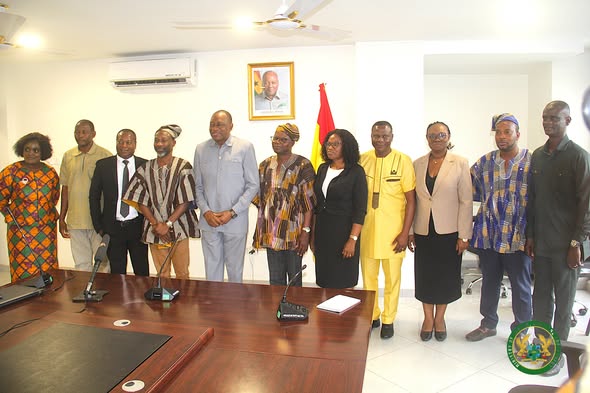
He made this known on Wednesday at the Second Steering Committee Meeting of the EU–Ghana Pact for Skills: Integrated Action on Green Jobs and Skills Project, held at the Ministry’s Conference Room in Accra.
Addressing the committee, he described the meeting as a strategic platform for reviewing progress and shaping the next phase of Ghana’s future labour market transformation.
He noted that the progress recorded under the project so far includes the establishment of implementation structures, ongoing skills-needs assessments, curriculum development for solar education at the vocational training level, strengthened partnerships with cooperatives and private sector actors, and the integration of the National Green Jobs Strategy into the Medium-Term National Development Policy Framework for 2026–2029.
“These achievements reflect a shared national commitment to creating decent, sustainable and future-ready jobs that will enhance Ghana’s competitiveness,” he said.
Dr Pelpuo expressed confidence that the Steering Committee’s discussions would strengthen the momentum in its implementation and set the stage for accelerated progress in the months ahead.
He emphasised that the Ministry of Labour, Jobs and Employment remains committed to championing the creation of high-quality green jobs that improve livelihoods while contributing to national development.
On his part, Mr Shadrach Mensah, Director of Research, Statistics, and Information Management, welcomed participants to the Second Steering Committee Meeting of the EU–Ghana Pact for Skills project and expressed the Ministry’s appreciation for their ongoing collaboration and technical support.
He described the meeting as a vital opportunity to review the progress made so far in strengthening Ghana’s transition to a greener economy.
Mr Mensah reiterated that a successful transformation of the skills ecosystem requires stronger collaboration, clear roles, information-sharing and alignment of interventions.
He reaffirmed the Ministry’s commitment to providing leadership, coordination and guidance throughout the project’s implementation.
Priscilla Osei-Wusu Nimako, ISD