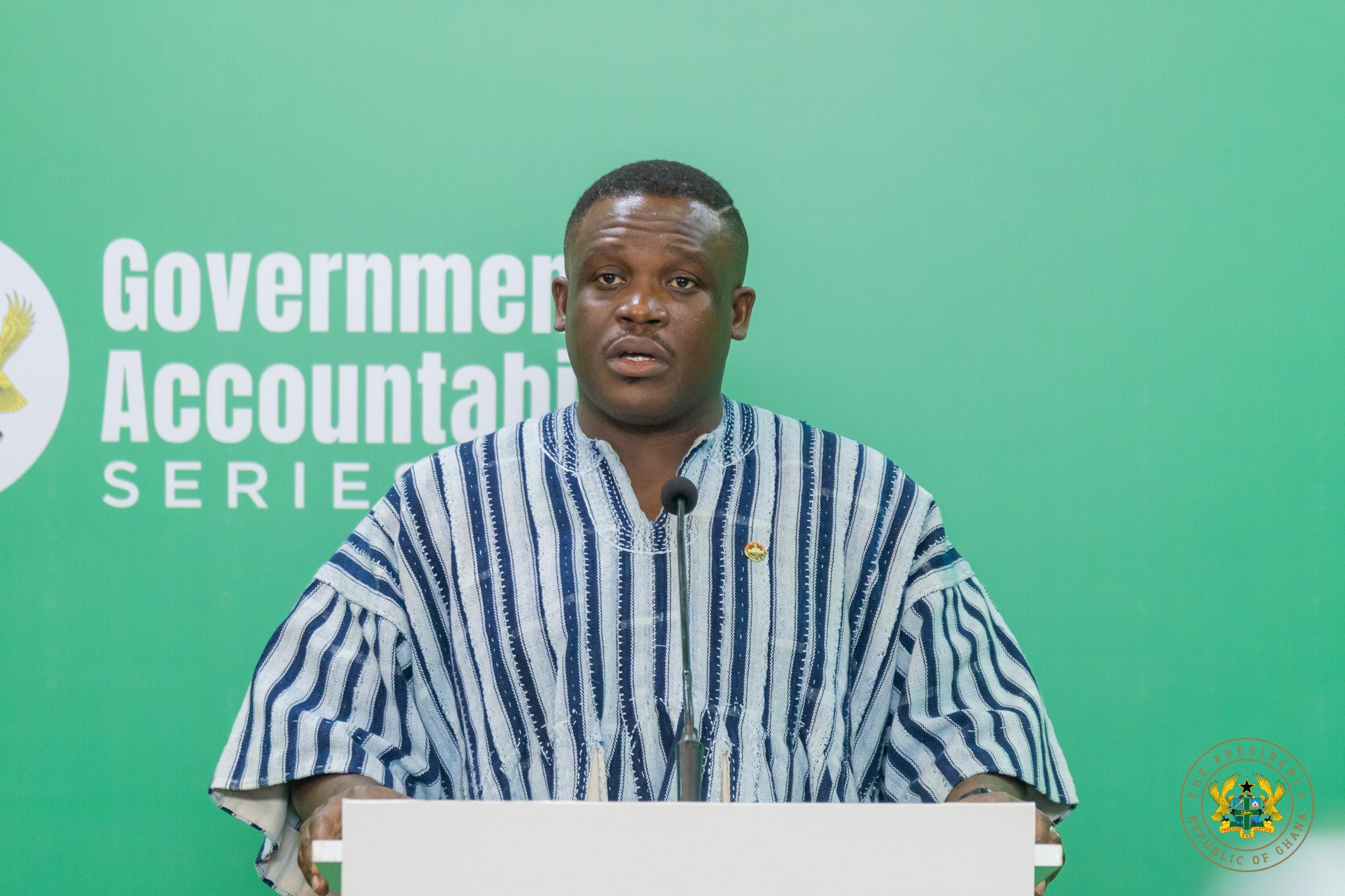
The Minister for Communications, Digital Technology, and Innovations, Mr Samuel Nartey George, has directed the National Communications Authority (NCA) to suspend DSTV’s broadcasting license effective August 7, 2025, if MultiChoice Ghana fails to reduce its subscription prices.
The minister announced this at the government’s accountability series, revealing that MultiChoice rejected his demand for a 30% price reduction in their packages.
“I wrote back to the NCA on Monday and directed the NCA in that letter to suspend the broadcasting license of DSTV effective 7th August 2025 if they fail to effect a reduction in their bundle prices,” he said.
The minister had given MultiChoice a July 21 deadline to respond to her pricing reduction request, but the company sent a nine-page letter refusing the demand.
MultiChoice cited the cedi’s 240% depreciation over eight years and claimed the recent cedi appreciation was “a fluke which could not be sustainable.”
Mr Nartey George dismissed these explanations and accused the company of exploiting Ghanaian consumers through unfair pricing.
“I cannot as Minister serving the Ghanaian people continue to watch what can best be described as plain stealing happening to the Ghanaian people,” the minister said.
The minister provided price comparisons from seven markets where DSTV operates, showing that Ghanaians pay $83 equivalent for premium content that costs Nigerians only $29 equivalent.
“How can anyone explain this price disparity to me? Enough of the mistreatment of the Ghanaian consumer,” he added.
The Minister noted that while MultiChoice claims the Ghanaian cedi depreciated by 240%, the Nigerian naira depreciated by 409% in the same period, yet Nigerians pay significantly less.
The DSTV pricing dispute comes as the ministry enforces broadcasting sector regulations through frequency audits and compliance measures.
A broadcasting frequency audit revealed multiple regulatory infractions with total estimated tax penalties of 9.5 million Ghana cedis, leading to several station shutdowns for non-compliance.
Earlier, the ministry directed the shutdown of 64 radio stations for regulatory violations, but President Mahama intervened and granted a 30-day amnesty period.
Of the 64 radio stations, 58 have written to the National Communications Authority and started regularizing their paperwork.
However, the minister revealed that 210 total radio stations remain in default, with the 64 representing just one phase of enforcement.
“For all those who have failed to take any step, there will be no further public announcement on it. There simply will be enforcement to protect the public resource,” he warned.
The ministry’s actions are part of the government’s Operation Recover All Loots initiative aimed at reclaiming state assets and ensuring transparent allocation of broadcasting frequencies.
The minister emphasized that his fidelity is to the Ghanaian people, and he believes consumers have been “fleeced and exploited for too long” by MultiChoice’s pricing practices.
Richard Aniagyei, ISD