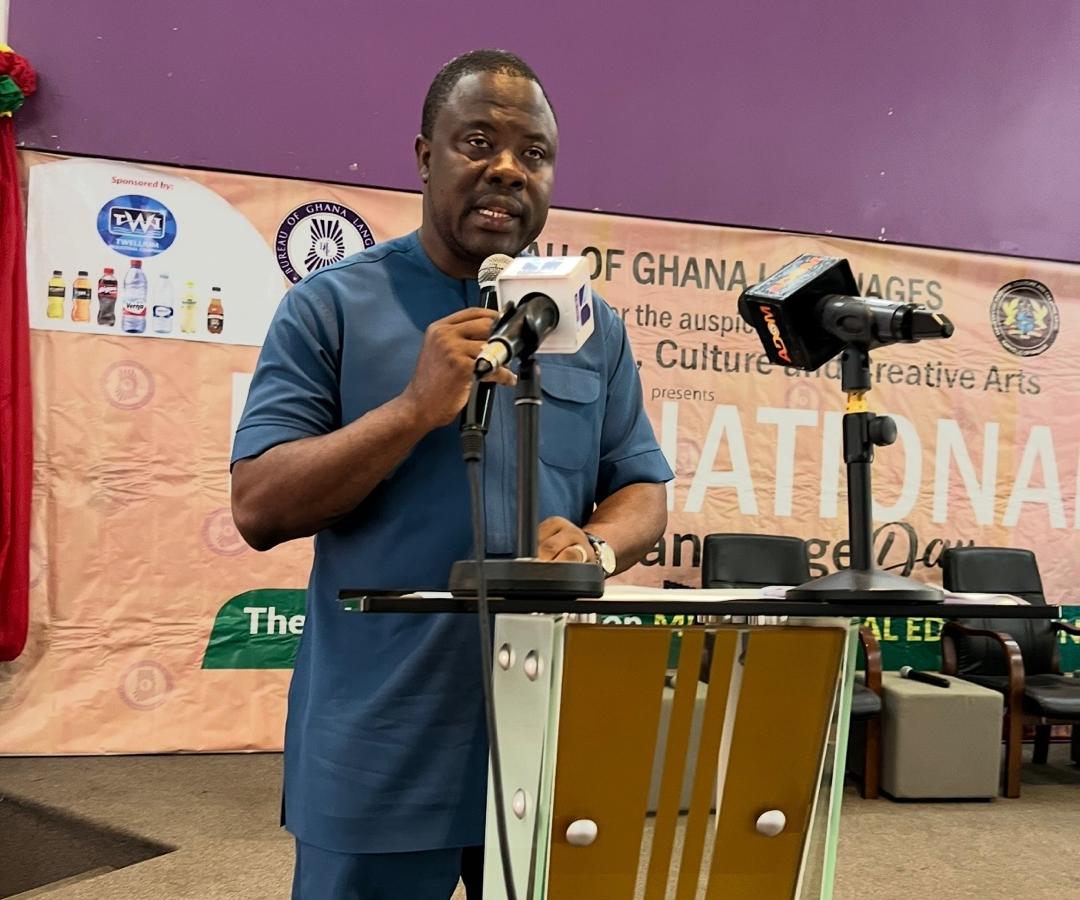
The Deputy Minister for Tourism, Culture and Creative Arts, Mr Yussif Issaka Jajah, has urged Ghanaians to value and promote their mother tongues as a means of preserving culture, strengthening unity and supporting national development.
He made the call on Tuesday while delivering a keynote address at the 2026 celebration of International Mother Language Day in Accra.
He acknowledged the historical significance of the day, which honours students who lost their lives in 1952 while protesting language discrimination, emphasising that the annual celebration promotes linguistic diversity, cultural heritage, and multilingual education worldwide.
He said the annual observance draws attention to linguistic diversity, cultural heritage and the promotion of multilingual education across the world.
“Language is the riverbed on which culture flows. Indigenous languages are central to identity formation and the transmission of values across generations,” he said.
He warned that sidelining local languages in schools and public life could weaken Ghana’s cultural fabric and affect social cohesion.
Citing examples from Asia, Mr Jajah said countries such as South Korea and Singapore recorded strong industrial growth while retaining their local languages as the main medium of instruction and governance. He said African countries could also modernise without giving up their linguistic heritage.
He referred to global estimates that nearly 3,000 languages face the risk of extinction before the end of the century. He said this calls for deliberate efforts to safeguard indigenous languages.
Mr Jajah encouraged citizens to “Speak Ghana, Eat Ghana, Wear Ghana and Feel Ghana,” linking the promotion of local languages to broader national development efforts.
On his part, the Acting Executive Director of the Bureau of Ghana Languages, Ebenezer Ahiator, highlighted the Bureau’s longstanding role in championing the annual celebration despite limited resources.
He noted that the 2026 theme, “Youth Voices on Multilingual Education,” emphasises the role of young people in preserving linguistic diversity and advancing inclusive education.
He stated that children who learn in familiar languages demonstrate stronger literacy outcomes and improved academic performance.
He called for renewed policy attention to Ghanaian language instruction in senior high schools, urging collaboration between education authorities to restore compulsory Ghanaian language studies at that level.
Irene Wirekoaa Osei, ISD