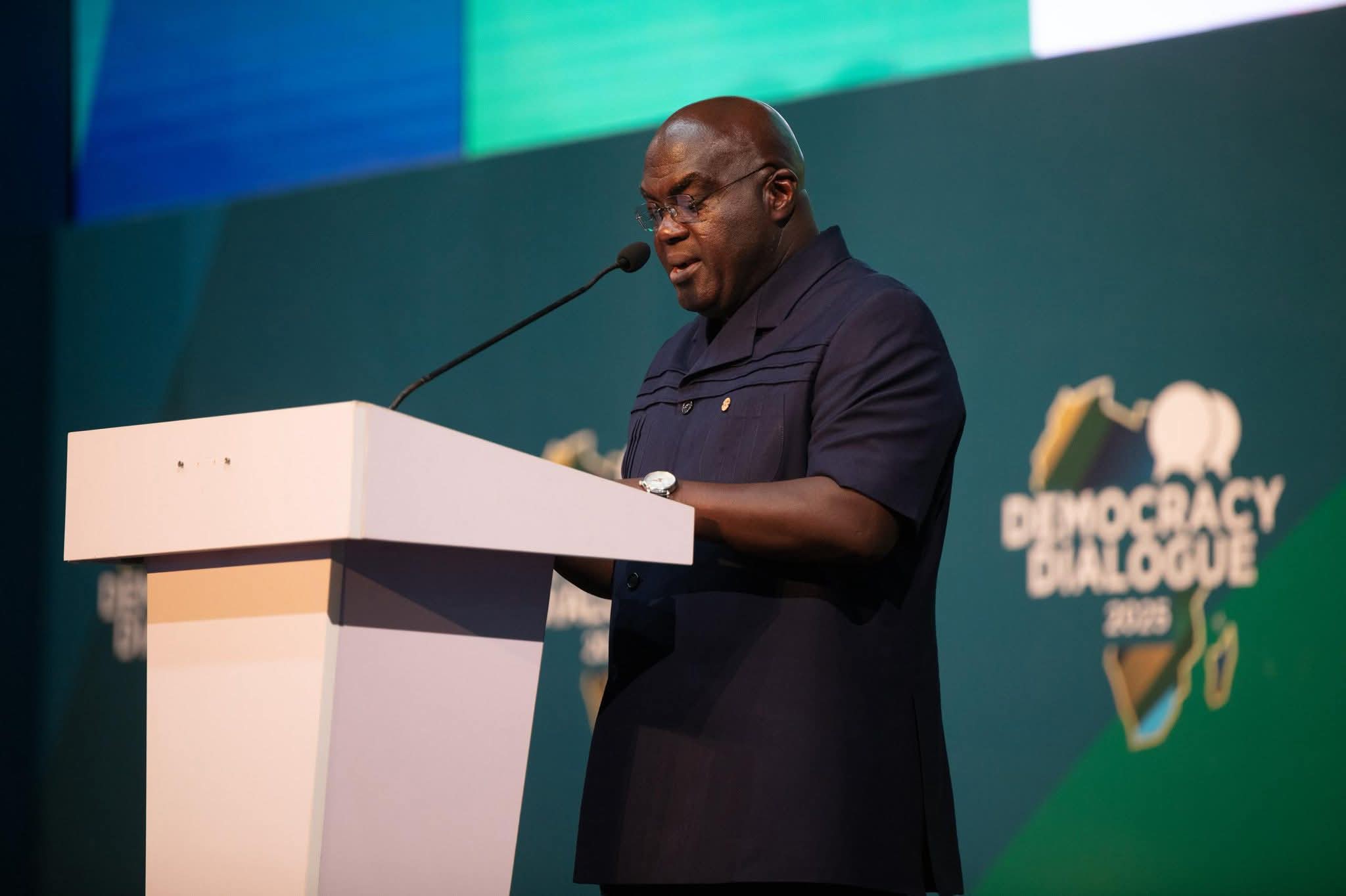
Chief of Staff Julius Debrah has called on Africans to remain “eternally vigilant” against subtle threats that undermine democracy, warning that the welfare of future generations depends on preserving democratic institutions across the continent.
Speaking at the closing ceremony of the Democracy Dialogue 2025 in Accra on Wednesday, Mr Debrah noted that protecting democracy requires collective responsibility rather than relying solely on political leaders.
He stressed that democracy must not merely survive but “truly flourish” in Africa as the continent faces growing challenges to democratic governance.
Mr Debrah told participants that the dialogue’s central theme “Why Democracies Die” reflected real and present dangers facing Africa’s democratic progress rather than theoretical concerns.
He warned that democracies typically fail through gradual erosion rather than sudden collapse, describing the process as death “by a thousand cuts through subtle incremental actions that erode the very foundations upon which we stand.”
The Chief of Staff outlined the collective responsibility required to guard democracy from internal threats, noting that citizens, institutions, and leaders all play roles in democratic preservation. He said the dialogue had sparked conversations that laid pathways for action across the continent.
Debrah positioned the call for vigilance within the context of concerning continental trends where democratic gains face erosion through various mechanisms.
He emphasized that protecting democracy requires active engagement rather than passive assumption that democratic institutions will automatically endure.
The Chief of Staff said future generations’ welfare directly depends on current efforts to preserve and strengthen democratic governance. He warned that failing to guard against democratic backsliding would leave younger Africans with weakened institutions and reduced freedoms.
Speaking on behalf of President John Dramani Mahama, he thanked former presidents Goodluck Jonathan and Olusegun Obasanjo, Bishop Kukah, and other participants for their contributions to the dialogue.
He said their participation had generated discussions needed to address democratic challenges facing the continent.
Mr Debrah emphasized that the responsibility for democratic preservation extends beyond government officials to include civil society, media, and ordinary citizens.
He said each group must understand their role in maintaining democratic institutions and actively work to prevent their erosion.
The Chief of Staff concluded that lessons from the dialogue must be applied in respective spheres of influence rather than remaining theoretical discussions.
“Translating dialogue insights into concrete actions represents the true measure of the event’s success,” he stated.
Richard Aniagyei, ISD