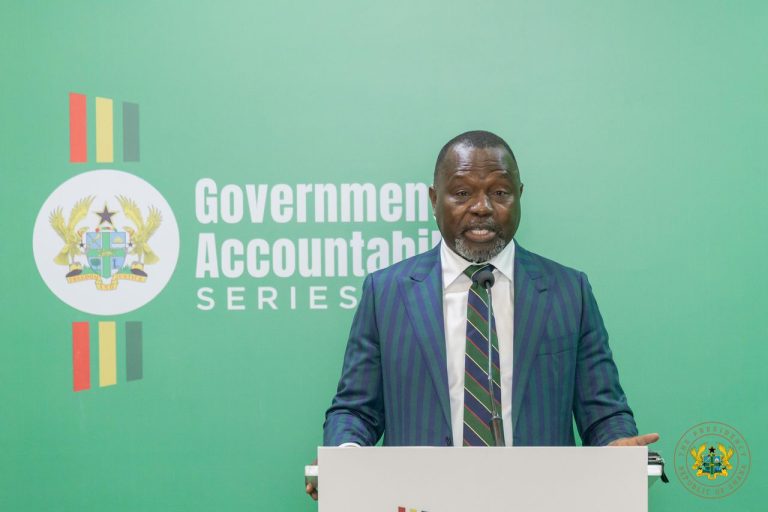
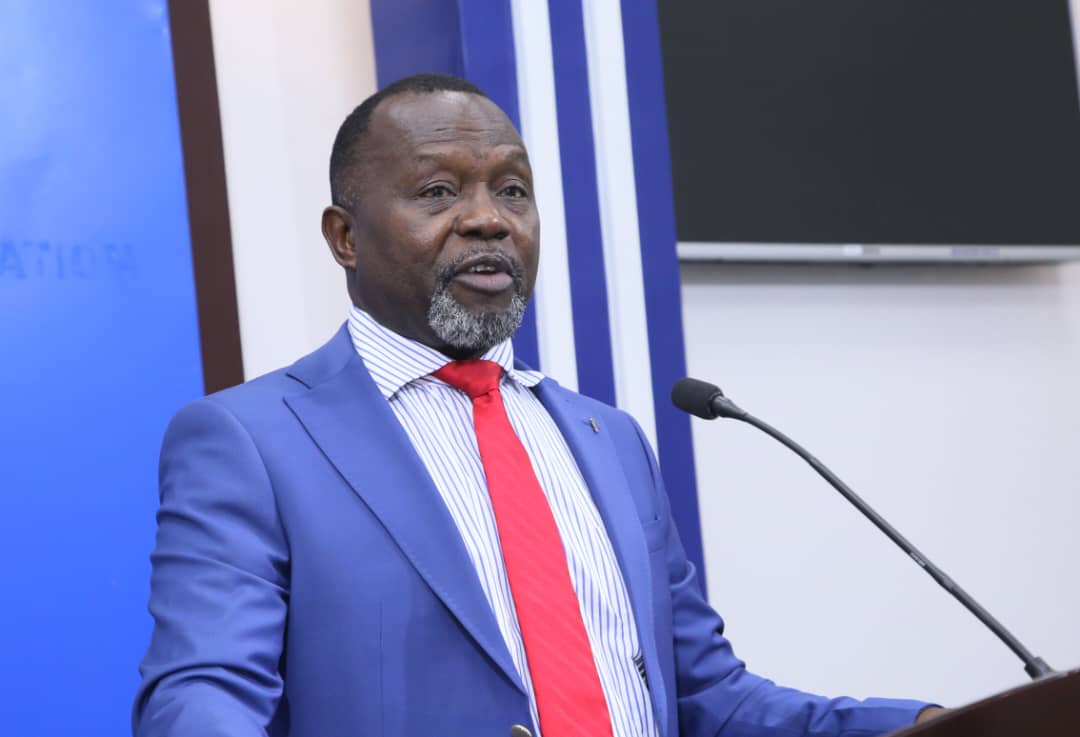
The Attorney-General and Minister for Justice, Dr Dominic Ayine, has announced plans to re-enact the Criminal Proceeds Recovery Bill aimed at strengthening Ghana’s legal framework for seizing assets linked to criminal activity.
According to him, the existing legal regime under Act 30 significantly limits the Attorney-General’s ability to recover assets derived from criminal enterprises, undermining effective prosecution and accountability.
He said this on Thursday, in Accra, during a visit by the Vice President, Prof. Jane Naana Opoku-Agyemang, noting that his office was working on the proposed legislation.
The bill, according to him, would empower the Attorney-General’s Office to pursue both criminal confiscation and civil recovery of assets connected to unlawful activities.
The Ministry of Justice explained that the proposed law would close a major legal loophole, enhance asset recovery efforts, improve public resources, and prevent criminal enterprises from benefiting from the proceeds of crime.
“I am putting together a bill known as the Criminal Proceeds Recovery Bill that would enable us not only to use criminal confiscations but also civil recovery, because in that way, the standard of proof is lower,” Dr Ayine stated.
He noted that under the current legal framework, the Attorney-General lacked the authority to confiscate assets obtained through criminal enterprises, despite being constitutionally mandated to prosecute criminal cases.
He said, “Currently, under Act 30, the Attorney-General doesn’t have the power to seize assets that are the result of a criminal enterprise. The EOCO and OSP have that power, but the person vested with the constitutional authority to prosecute, the original owner of the power, does not.”
Dr Ayine explained that the new bill would allow the Ministry to pursue civil recovery of assets linked to criminal activity. “If we link any asset to criminal activity, we will be able to apply to the court to confiscate it,” he added.
The announcement comes amid broader challenges facing the Ministry, including funding constraints, infrastructure deficits, and staffing shortages, particularly in newly created regions.
Dr Ayine indicated that effective implementation of the proposed bill would significantly improve the Ministry’s capacity to support state attorneys, provide equipment and transportation for court processes, and expand its regional presence across the country.
Judith Twumwaa, ISD