The structured settlement deal in the Unibank case has so far delivered GH₵824 million worth of landed properties to the state, with an additional GH₵1.2 billion expected from third parties within 18 months, representing a 60% recovery of the revised GH₵3.3 billion financial exposure.
Attorney General Dr. Dominic Ayine made this known in defence of his decision to secure a settlement deal in the Unibank case following public criticism of his earlier press release announcing the discontinuation of criminal proceedings against Dr. Kwabena Dufour and seven others.
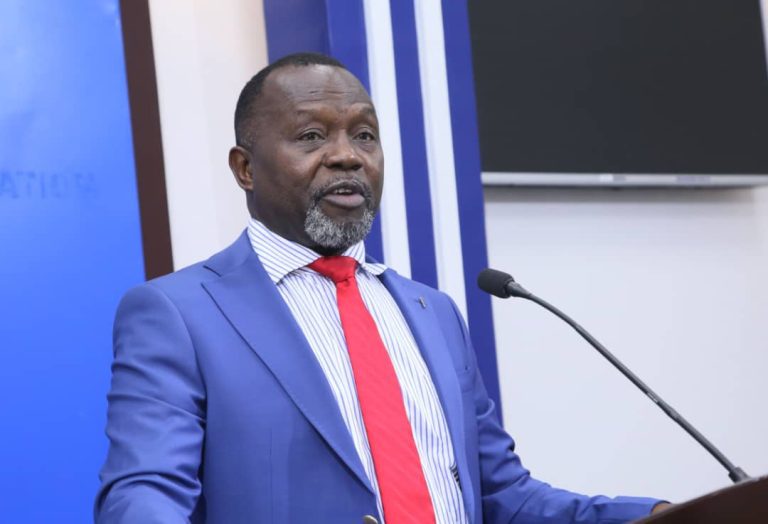
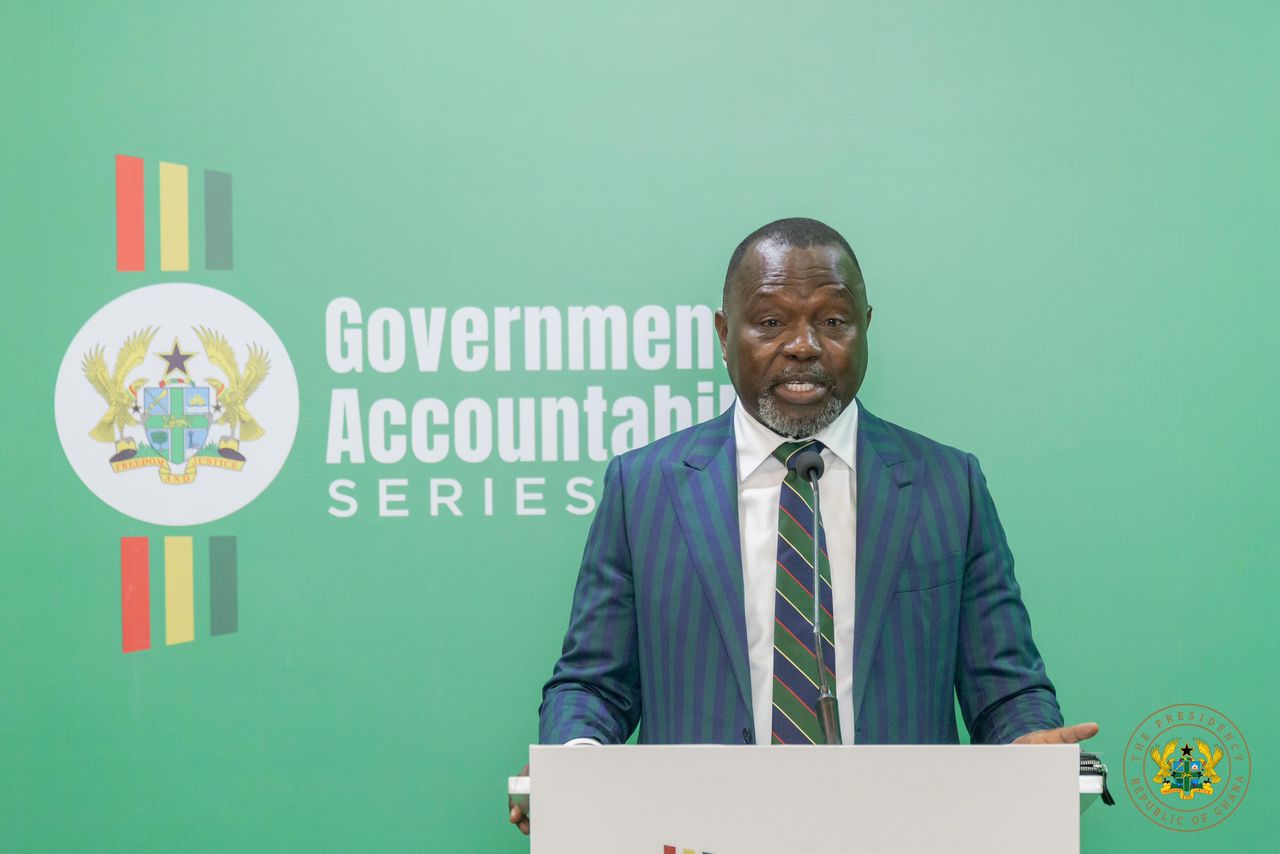
Speaking at the government accountability series on Monday, Dr. Ayine provided detailed justification for his earlier press release that announced the no-prosecution entry, addressing what he called “misimpressions” created by the initial announcement.
“I decided that it is as part of the accountability and transparency series, it is important for me to provide details because certain misimpressions were created, which are not accurate when it comes to the decision that I’ve taken,” Dr. Ayine explained.
Dr. Ayine explained that the original civil case exposure of GH₵5.7 billion was revised down to GH₵3.3 billion after excluding GH₵2.1 billion in fictitious accounting entries that involved no actual cash outflows, as well as GH₵300 million relating to placements with a Securities and Exchange Commission-regulated company in liquidation.
Under the settlement terms, the accused persons have provided landed properties valued at GH₵824 million to Unibank in receivership, effectively transferring the assets to the Bank of Ghana. The defendants will also be responsible for any shortfall in proceeds from the sale of these properties.
The second component involves the accused persons’ active cooperation to help the receiver recover GH₵1.2 billion from direct beneficiaries who received payments on their instructions.
Dr. Ayine disclosed that GH₵500 million has already been recovered from this amount, leaving GH₵700 million still to be pursued.
“Recovery of the remaining balance of 0.7 billion out of the 1.2 billion Ghana cedis and the realization of the landed properties provided are expected to be completed over a timeline of 18 months,” the Attorney General explained.
Dr. Ayine defended the 60% recovery threshold, arguing that prolonged litigation could have resulted in lower net recovery when accounting for legal costs, procedural delays, and potential asset dissipation.
He emphasized that no asset tracing had been undertaken by his predecessors who filed the criminal charges.
The Attorney General revealed that the settlement negotiations began in March 2025 when lawyers for the Unibank directors and shareholders approached his office with a proposal to settle their indebtedness.
He stated that he had authorized the receiver to engage in reconciliation exercises to determine the full scope of exposure.
“The objective was to assess the feasibility of a comprehensive settlement that combined liabilities under both the criminal proceedings and the ongoing civil proceedings to reach a unified resolution,” Dr. Ayine said.
The settlement includes quarterly review mechanisms to ensure the accused persons fulfill their obligations, with oversight from the Attorney General, the Bank of Ghana, and the Ministry of Finance.
Dr. Ayine stressed that the criminal charges against Dr. Kwabena Dufour, former Governor of the Bank of Ghana and former Finance Minister, involved causing financial loss to the state rather than personal theft or looting of public funds.
The deal represents a shift toward non-conviction-based asset recovery, which the Attorney General argued provides more practical value to the state than pursuing potentially unsuccessful criminal prosecutions that could result in zero recovery.
The settlement effectively ends the six-year criminal trial that had shown no immediate resolution, while securing tangible asset recovery for the state through a structured approach that prioritizes practical outcomes over punitive measures.
Richard Aniagyei, ISD