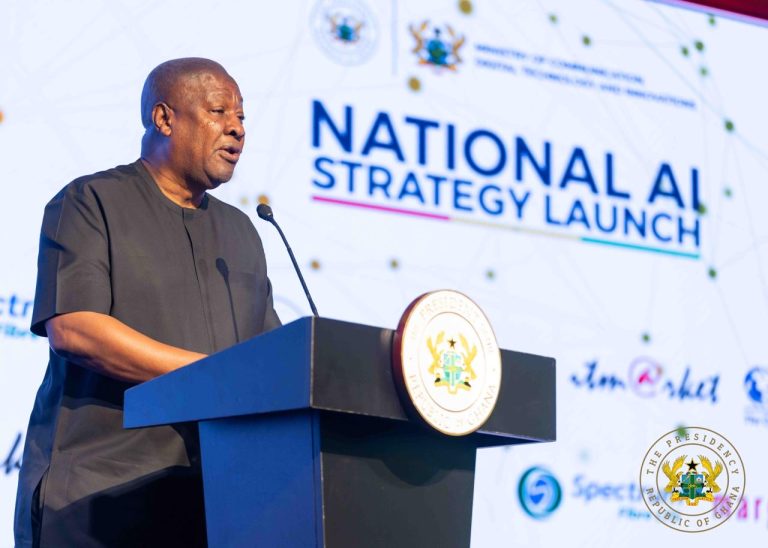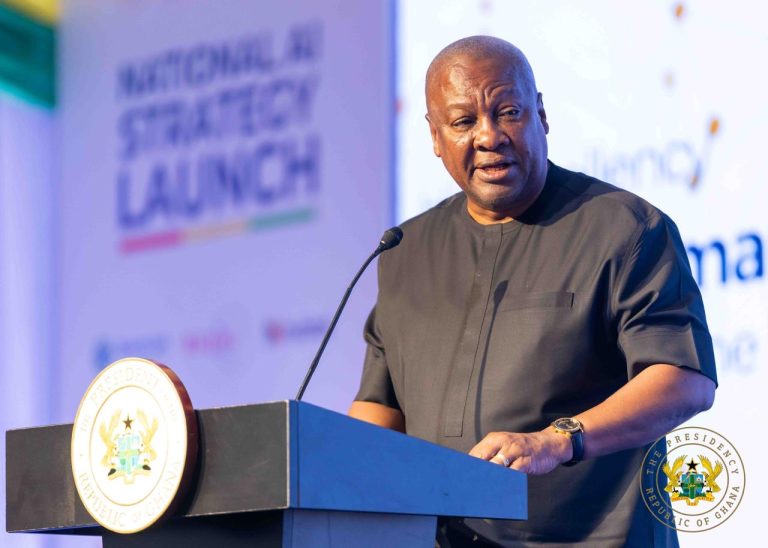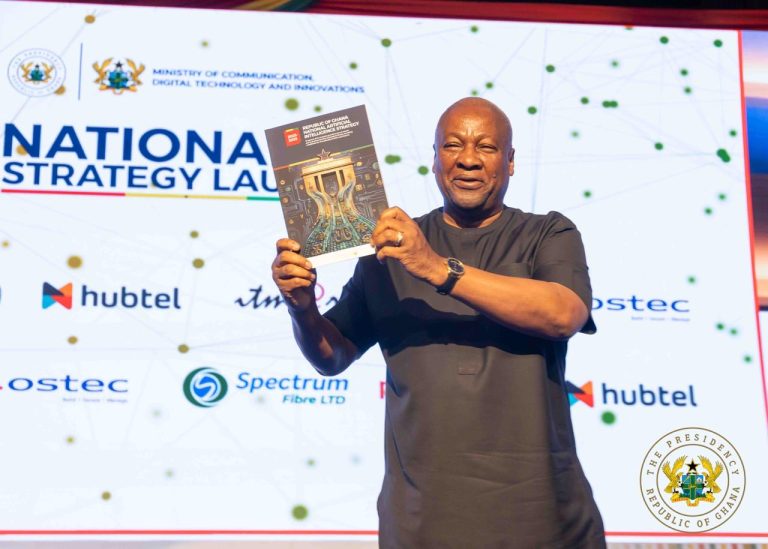
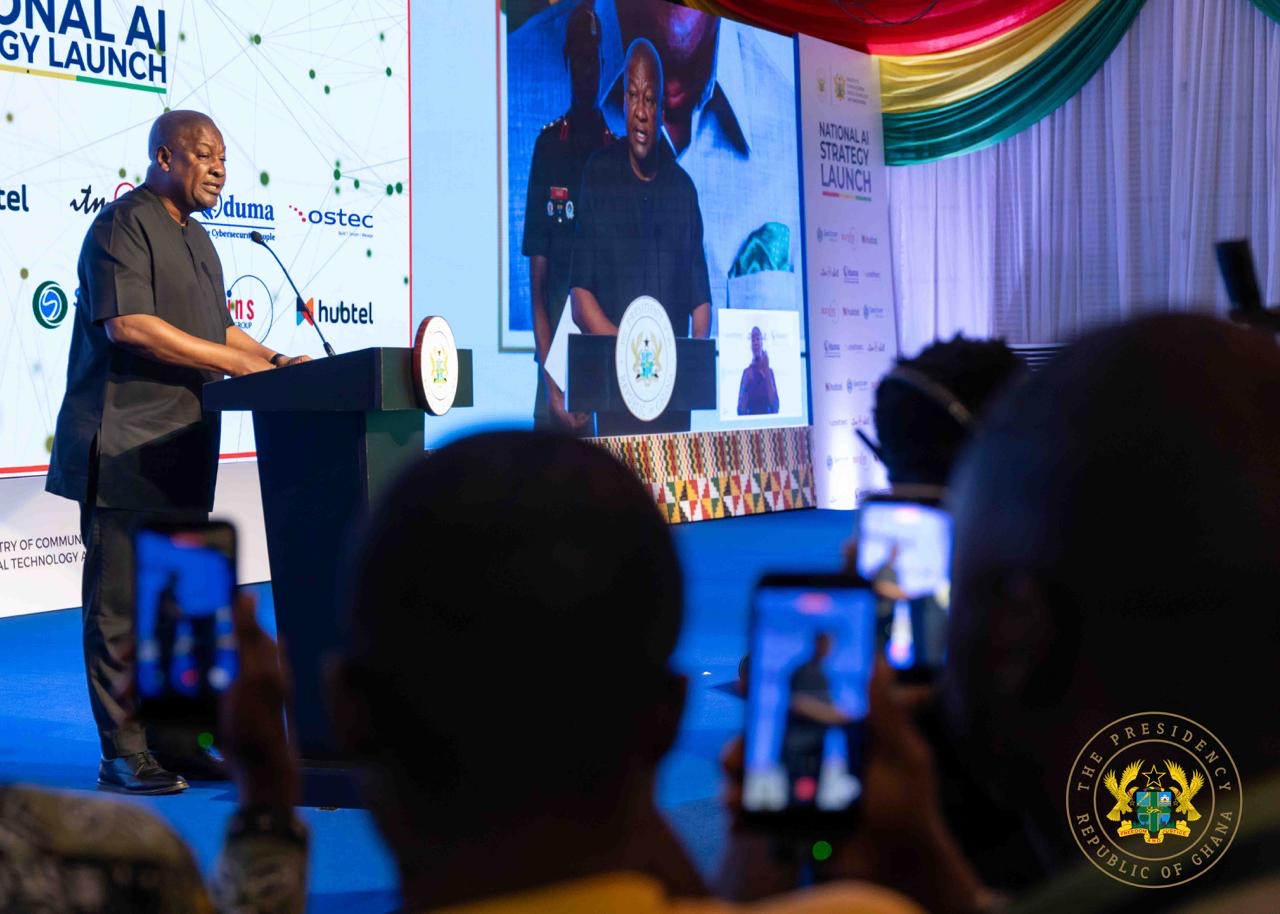
President John Dramani Mahama has addressed widespread concerns about artificial intelligence and job losses, pledging that Ghana’s approach to AI adoption will be built around enhancing human capabilities and protecting the dignity of workers rather than replacing them.
The President made the assurance on Friday during the launch of Ghana’s National Artificial Intelligence Strategy 2025 to 2035, acknowledging that many Ghanaians were worried about the impact of AI on employment and livelihoods.
“Many citizens worry that machines will replace human labour, leaving workers vulnerable and excluded. As a responsible government, we take these concerns seriously,” the President said.
He said a simple but firm principle would guide the government’s approach.
“AI must enhance human capabilities and not diminish human dignity,” the President declared.
President Mahama said Ghana would pursue a human-centred, inclusive and responsible model of AI adoption, one that valued not only efficiency but also resilience, sustainability and the centrality of the human person.
The government, he said, would invest in upskilling and reskilling the public sector workforce and support workers across all sectors to adapt and thrive in the new technological era.
“We do not intend to surrender our people to technological disruptions. We intend to prepare them to lead in it,” he said.
The President said education and workforce development were among the core pillars of the National AI Strategy, with the One Million Coders programme serving as the government’s most direct investment in building a national talent pipeline.
The programme, which has already processed over 100,000 applications, aims to train at least 300,000 Ghanaians this year in digital and AI skills across more than 15 courses in 10 disciplines.
Looking further ahead, the government plans to introduce AI coding, robotics and electronics at the basic school level, with a curriculum review committee tasked to complete its work by the end of June 2026, ensuring that the next generation of Ghanaians enters the workforce prepared for the digital age.
President Mahama said the government was also alive to the risk of exclusion, pledging that the rollout of AI would respect gender considerations and ensure that the informal sector and persons with disability were not left behind in the technological transition.
“We envision a future in which our informal sector and persons with disability are not excluded from technological progress,” he stated.
Richard Aniagyei, ISD