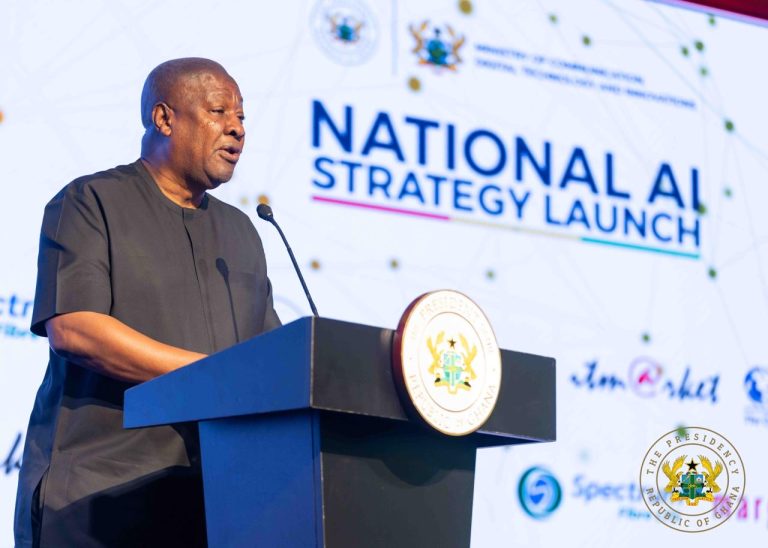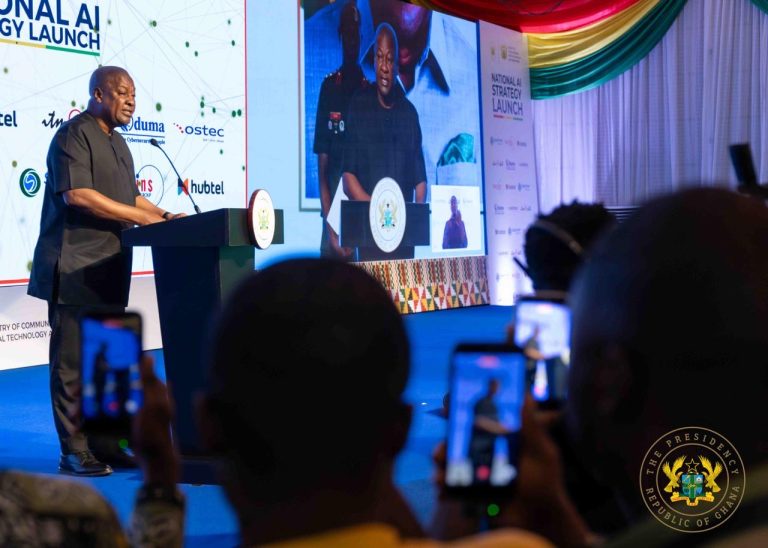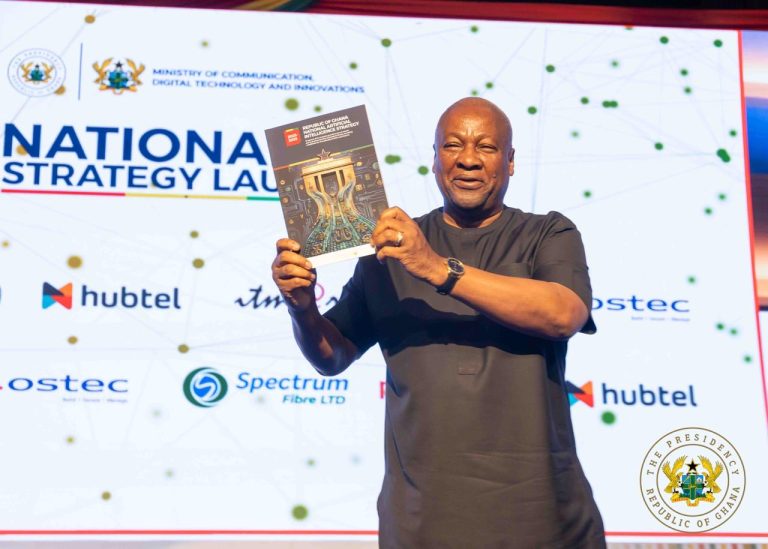
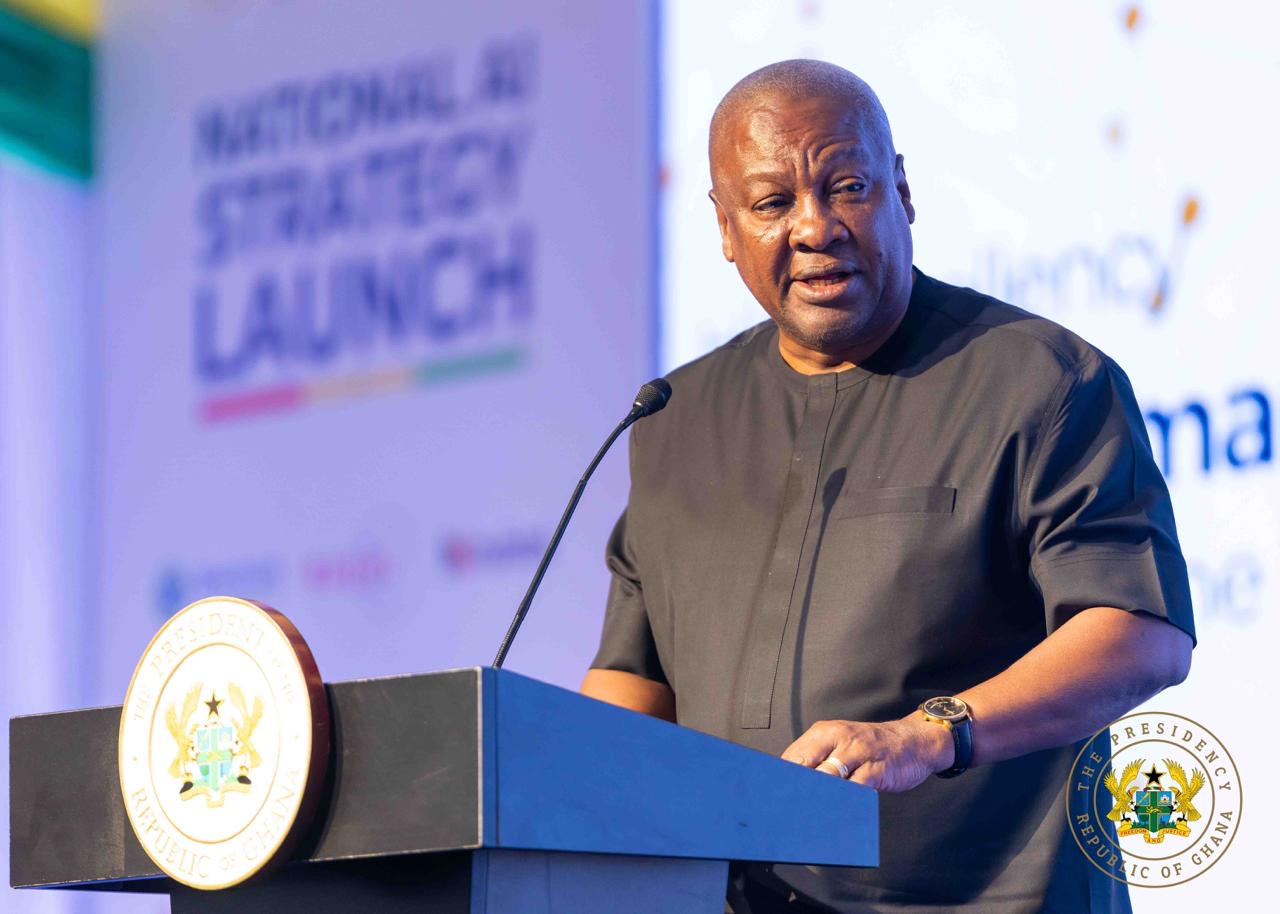
Gov’t will invest $250 million to establish a world-class AI computing centre, with an additional $20 million committed to support the short to medium-term implementation of the National AI Strategy.
President John Dramani Mahama announced this on Friday at the launch of the country’s National Artificial Intelligence Strategy.
The President explained that the investments was bold but necessary, saying that AI could not thrive without the infrastructure to support it.
“Data, computing power, connectivity and energy are now as strategic to the digital age as roads, ports, railways and power plants were to the earlier eras of development,” the President said, adding that the government was taking deliberate steps to strengthen the national data centre and ensure the country’s digital backbone was secure, resilient and capable of supporting growing AI demands.
The proposed AI Computing Centre, he said, would serve as a hub for research, innovation and enterprise, giving Ghanaian talent the tools to build solutions not only for the country but for the wider African continent.
He said the scale of the investment reflected the seriousness with which the government was approaching the AI agenda, noting that transformation must be measurable, accountable and results-oriented rather than merely rhetorical.
To that end, the government had introduced key performance indicators across ministries, departments and agencies to drive measurable adoption and integration of AI across the public sector.
The President acknowledged, however, that government alone could not build a thriving AI ecosystem and called on academia, civil society, industry and development partners to join the effort. “To those who have yet to join this effort, I extend an invitation to partner with us in implementing this strategy. Invest in Ghanaian talent, support Ghanaian innovation, work with us to build an AI future anchored in inclusion, shared prosperity and African relevance,” he said.
The financial commitments come alongside the One Million Coders programme, which has already processed over 100,000 applications and is targeting the training of at least 300,000 Ghanaians this year across more than 15 courses in 10 disciplines. Government also plans to introduce AI coding, robotics and electronics at the basic school level following a curriculum review expected to be completed by the end of June 2026.
By 2035, President Mahama said, the ambition was to have built a national AI ecosystem that expands literacy and access, strengthens jobs and entrepreneurship, supports local innovation, deepens data sovereignty and improves public service performance.
Richard Aniagyei, ISD