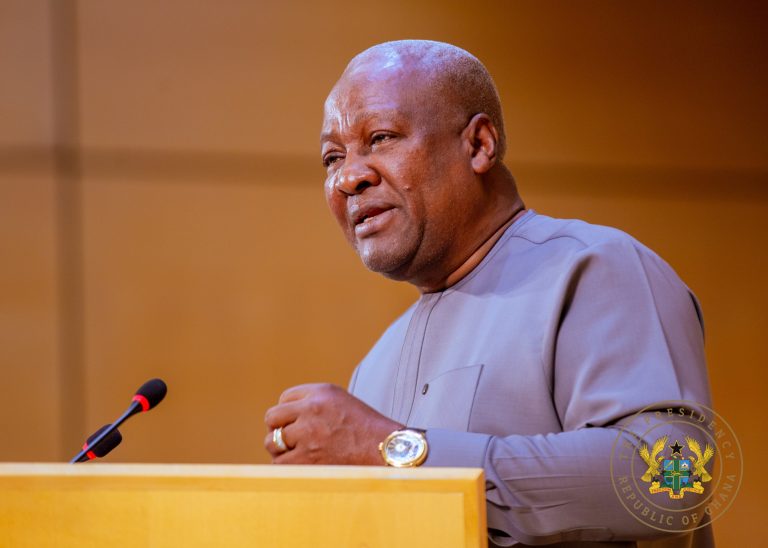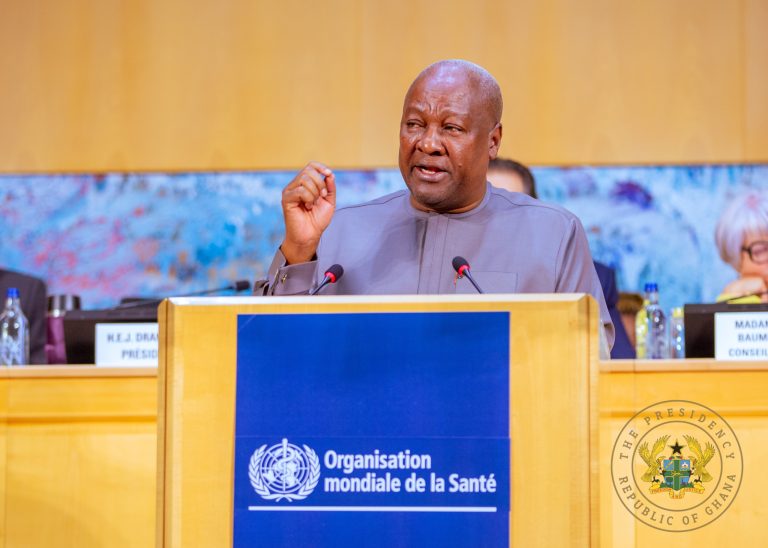
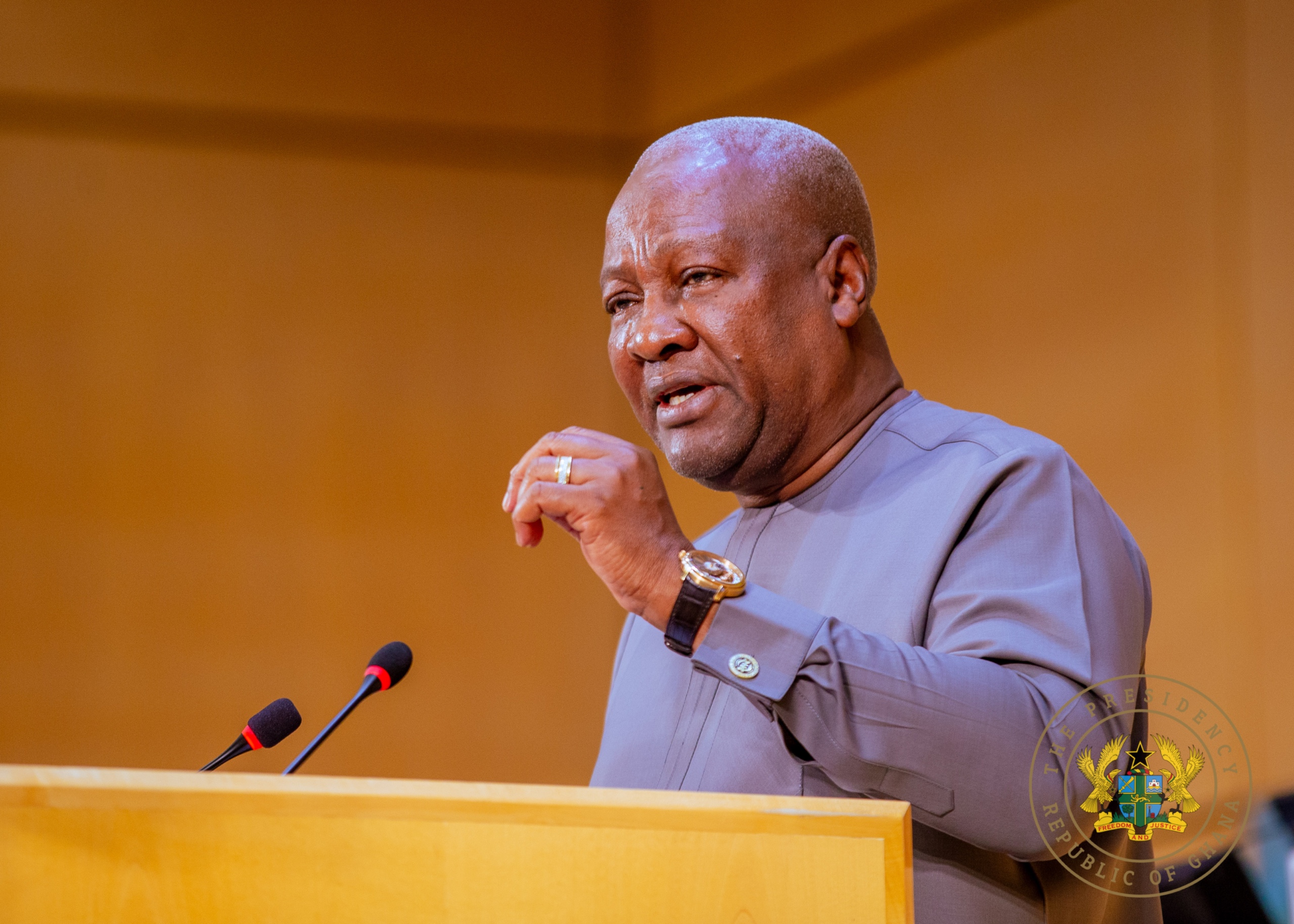
President John Dramani Mahama has called for a shift in global health governance, urging countries in the Global South to take greater control of how their health systems are financed, managed, and sustained.
The President made this call during his keynote address at the 79th World Health Assembly in Geneva on Monday.
He said African countries and other developing regions must be supported to build the capacity to fund their own healthcare systems, produce essential medicines locally, and manage health data within their own jurisdictions.
According to him, the current global health structure has left many countries overly dependent on external systems, adding that long-term resilience will depend on reducing reliance on foreign-controlled financing and supply chains.
President Mahama explained that under what he called a “health sovereignty” approach, countries should be able to plan and deliver healthcare based on their own priorities, backed by predictable domestic resources and stronger local systems.
He pointed to challenges in the existing arrangement, where many health officials in developing countries spend considerable time preparing reports for external partners instead of focusing on primary healthcare delivery.
According to him, this imbalance limits the ability of national systems to respond effectively to everyday health needs.
The President also questioned the assumption that the expansion of global health institutions has automatically translated into better outcomes, saying the growth in organisations has not always improved coordination or service delivery at the country level.
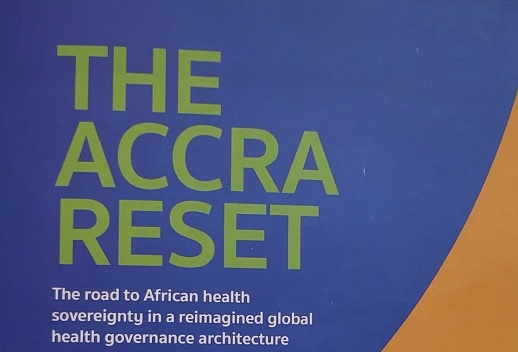
To address these concerns, President Mahama said Ghana is advancing the “Accra Reset” initiative, which is intended to support a new approach to global health governance and financing led by countries in the Global South.
He said the initiative rests on three main components.
The first is a High-Level Panel on Reform made up of independent experts tasked with reviewing the global health system.
The second is the Reform Interlocking Observatory, designed to align the work of major institutions such as the World Health Organisation, Gavi, and the Global Fund to reduce duplication and policy conflict at the country level.
The third is the Health Investment National Gateway (HINGE), which will serve as an implementation platform to turn policy commitments into investments in areas such as local pharmaceutical production, bio-innovation, and health system strengthening.
President Mahama said the framework is aimed at strengthening the ability of African countries and other developing regions to manage their own health systems while reducing long-standing dependence on external support.
Richard Aniagyei, ISD