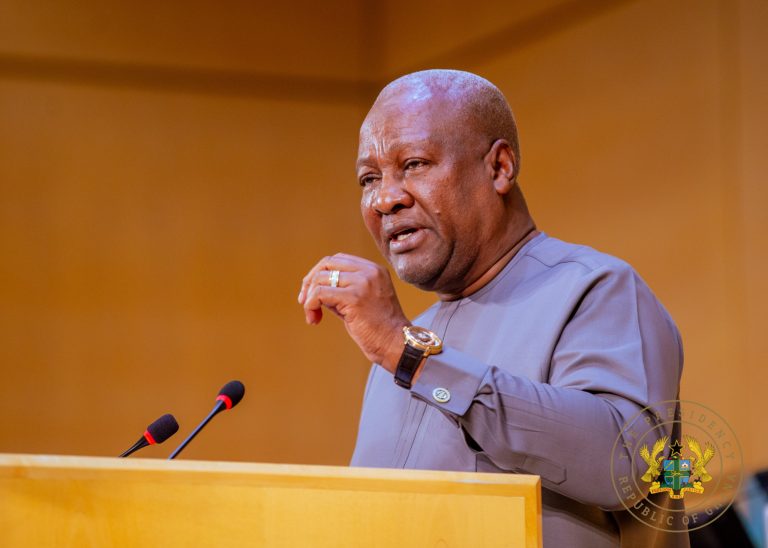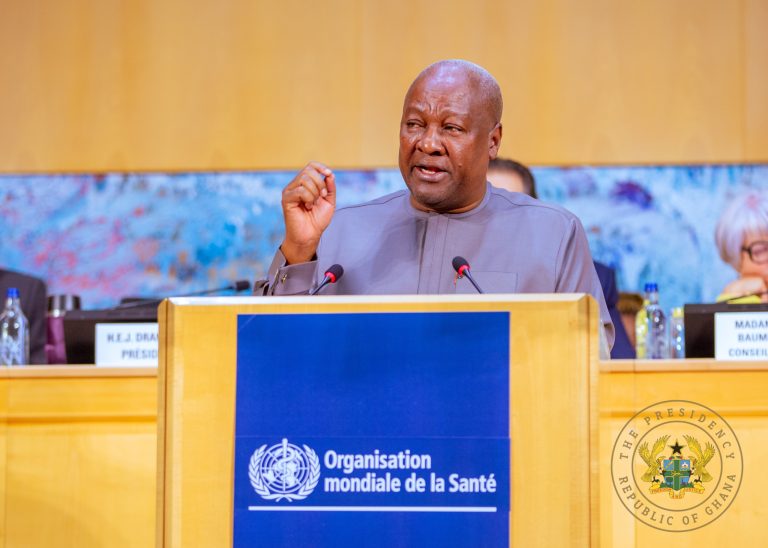
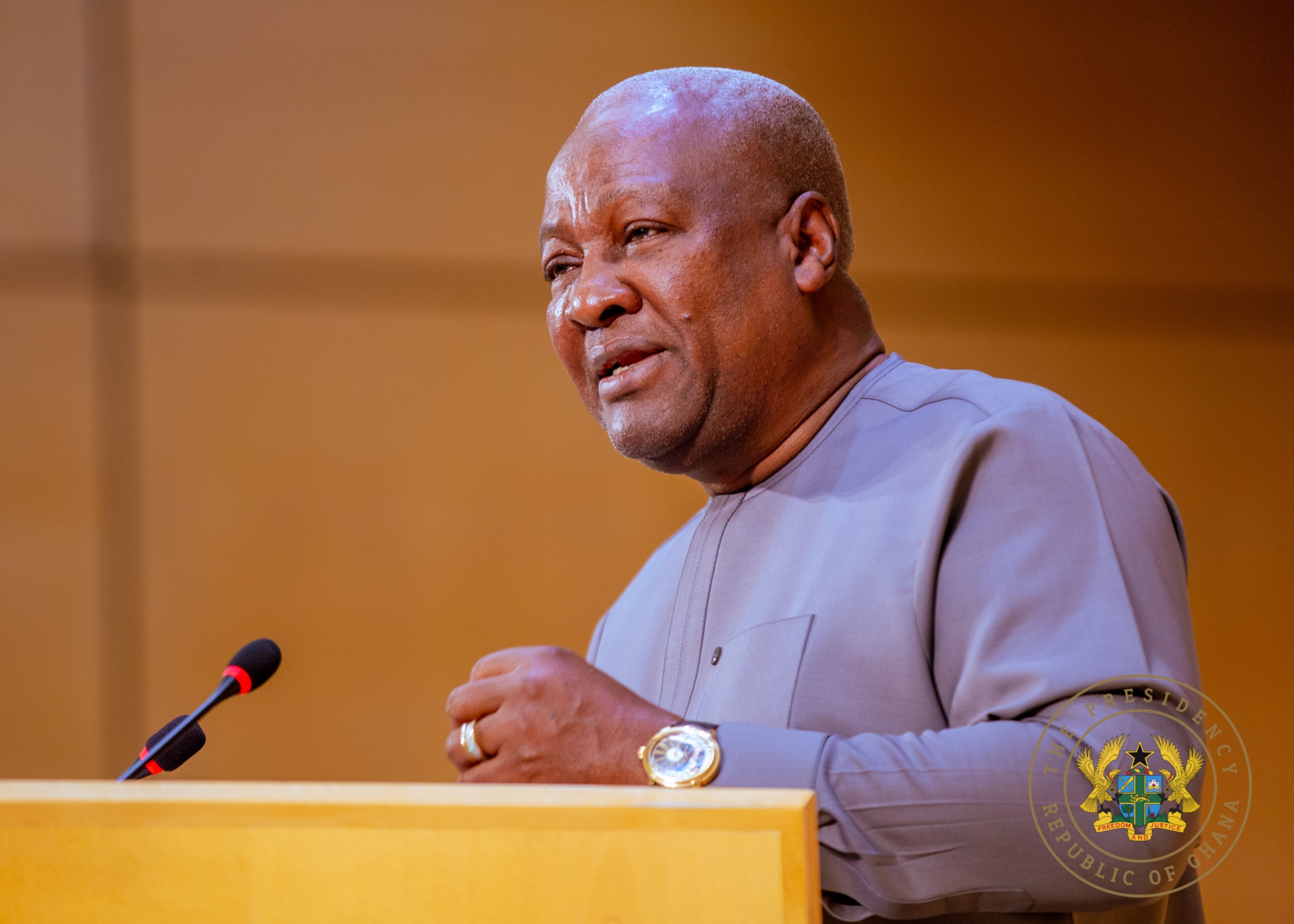
President John Dramani Mahama has warned that proposed reforms to the global health system risk losing their purpose if they are shaped to protect existing institutions rather than address long-standing weaknesses.
Delivering the keynote address at the 79th World Health Assembly in Geneva on Monday, President Mahama said he had heard whispers that the current draft resolution on reforming the global health system sought to protect existing organisational mandates and prohibit any recommendation for mergers or consolidations among global health institutions.
He said such an approach would undermine the entire purpose of reform, drawing on a Malian proverb to make his point: “Do not let the sight of those eating roasted maize force you to cook your seeds.”
“If we launch a reform process that is prohibited from recommending actual reform, we are merely performing a ritual. We cannot prioritise institutional comfort over human survival,” he cautioned.
The President said the World Health Organisation’s legitimacy was not served by protecting silos but by a fearless analysis of what actually worked.
He noted that the world had more global health organisations than ever. Yet, country-level fragmentation had only worsened, suggesting a system that confused the multiplication of institutions with the multiplication of impact.
The President said he had co-chaired the working group for the Lusaka Agenda and that Ghana welcomed the Assembly’s consideration of a joint process to reform the global health architecture. But he said the reform had to be genuine, not cosmetic.
He noted that the context for the Assembly’s deliberations was already dire.
Ghana had lost $78 million following the closure of USAID programmes, money that funded malaria, maternal and child health, nutrition, and HIV/AIDS treatment.
Globally, humanitarian assistance had declined by 40 percent, and projections suggested that nine million preventable deaths could occur by 2030 as a direct result of aid cuts.
He told delegates that the Assembly had gathered not to lament those statistics but to decide whether the architecture they supervised was still fit for purpose and whether they dared to build something better.
Richard Aniagyei, ISD