
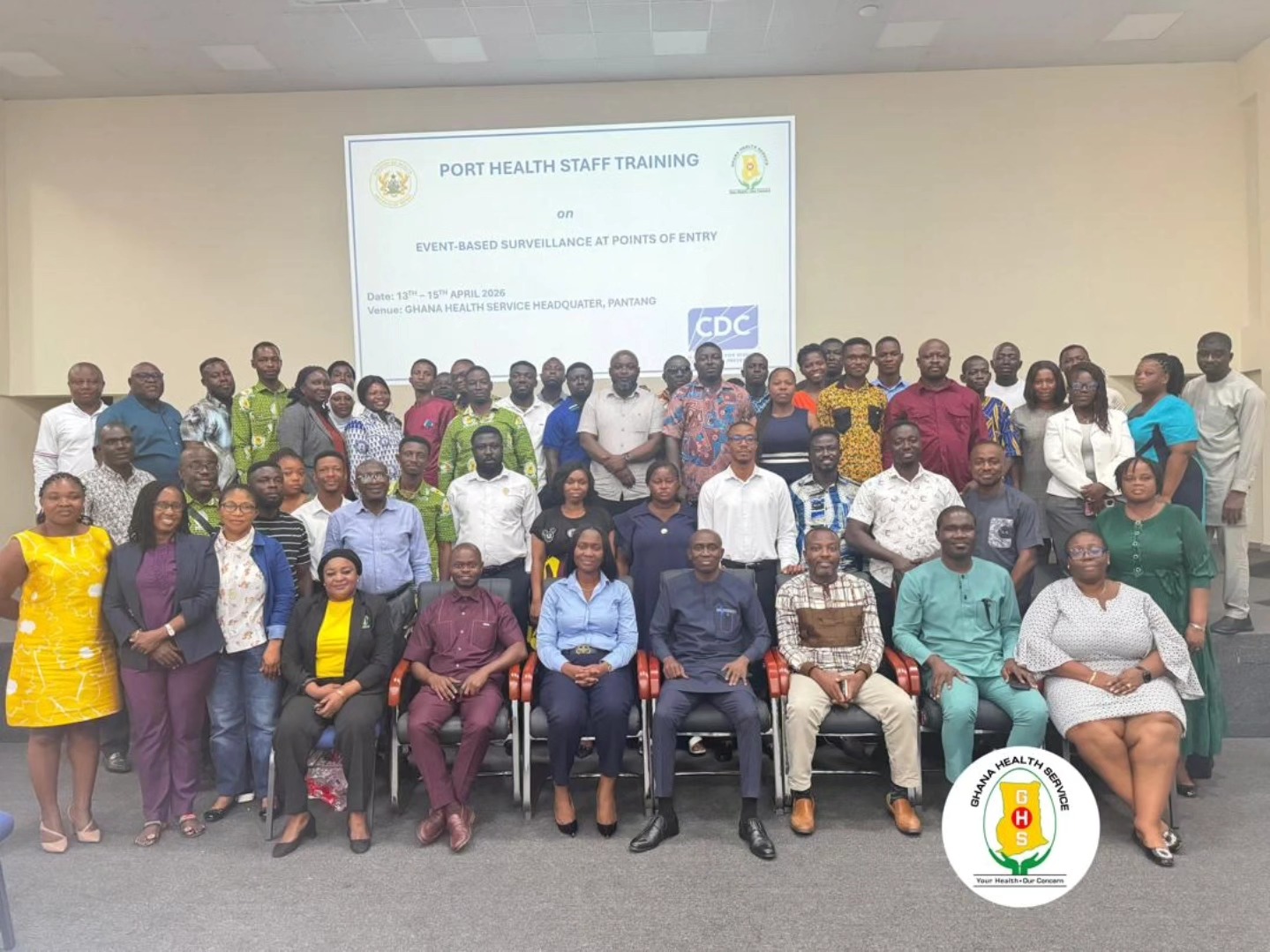
The Director of the Public Health Division of the Ghana Health Service, Dr Franklin Aseidu-Bekoe, has underscored the increasing necessity to expand Event-Based Surveillance, especially at Points of Entry, as a supplementary method to the current indicator-based surveillance systems.
He stated this on Thursday in Accra during a two-day training workshop focused on Event-Based Surveillance (EBS) at Points of Entry for Port Health personnel across the nation, intending to strengthen the capacity of officers to promptly detect, verify, assess, and report public health events of concern
He indicated that EBS was centred on the quick identification, reporting, and evaluation of unusual health events and signals from both formal and informal sources, rendering it an essential instrument for early detection and response.
He stressed the significance of collaboration, asserting that effective EBS relies on robust coordination not only within the health sector but also with key agencies like the Ghana Immigration Service, Customs officials, and other stakeholders operating at Points of Entry.
He encouraged participants to strive towards establishing a more robust and responsive Port Health system to improve Ghana’s overall public health preparedness and response capabilities.
Dr Danielle Barradas, CDC Country Director, reaffirmed CDC’s continued support for Ghana’s public health systems.
She mentioned that in an era of global travel, diseases can spread across borders within hours, making border health security and surveillance at Points of Entry increasingly critical.
Dr Barradas described the training as timely and relevant, hence encouraged participants to actively engage, apply the skills acquired at their duty stations, and ensure that learning continues beyond the workshop.
She noted that public health professionals must regularly assess their preparedness and response capacities, highlighting the importance of simulation exercises because such exercises help test existing systems, identify gaps, and strengthen readiness for real-world public health events.
Grace Acheampong, ISD