A total of 121 health professionals have departed Ghana for Antigua as the first batch under the Ghana Labour Exchange Programme (GLEP), with government working on similar placements in Jamaica, Barbados, and Trinidad.
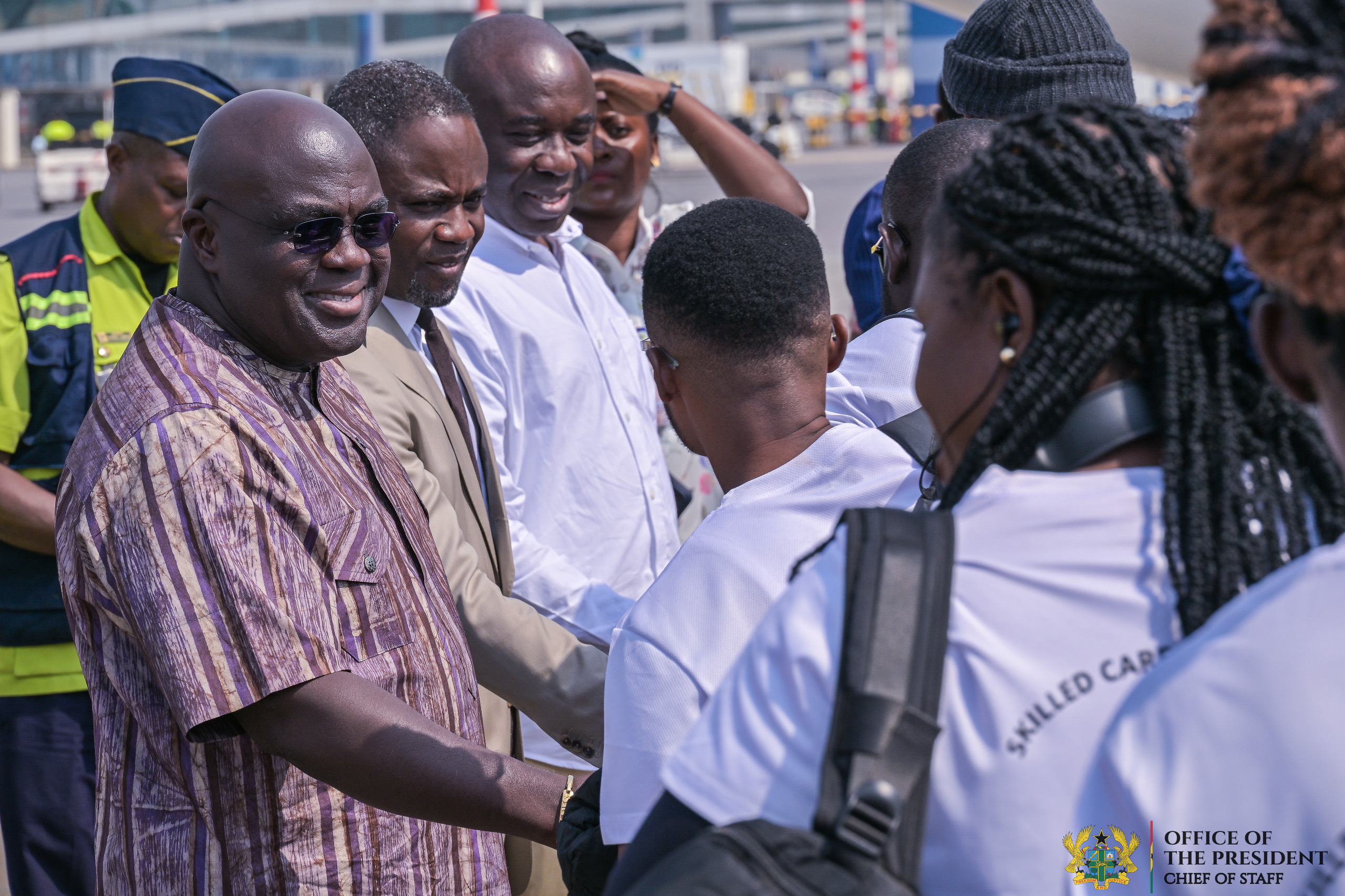
The Chief of Staff, Julius Debrah, led the send-off delegation that included the Minister of Health, Mr Kwabena Mintah Akandoh, and other officials who bade farewell to the departing health workers on Monday.
Mr Akandoh, speaking at the ceremony, said the programme is one of the interventions by President John Dramani Mahama to create more jobs for Ghanaians.
He disclosed that government inherited a backlog of more than 80,000 health professionals who have completed various degrees but remain unemployed, prompting the administration to explore avenues where countries have requested Ghanaian health workers.
“Today is about Antigua, we are working on Jamaica, Barbados and Trinidad. And so we will be doing that in batches,” the Minister stated during the send-off ceremony.
He reminded the departing health workers that they are carrying the flag of Ghana and urged them to work with diligence and professionalism in their host country.
“As you are going, you must be reminded of the fact that you are carrying the flag of Ghana. And therefore we wish that you go and work with diligence and professionalism,” he stated, adding that government will be following their progress with keen interest.
The Minister assured unemployed health professionals at home that their turn will come as government continues to work on placements in other Caribbean nations.
He addressed concerns about exporting health workers while domestic health facilities face staffing challenges, explaining that the availability of health professionals in Ghana is not a problem but rather an issue of budgetary capacity to absorb them all at once.
“Usually, the debate has been the fact that we do not have health workers in our various health facilities, but we are exporting health workers. That is not it. The availability of health professionals in this country is not a problem. As I have already indicated, we have excess. We have inherited about 80,000 health professionals,” the Minister explained.
He noted that while government has a country to govern, the national budget can only absorb a certain proportion of health professionals at any given time, necessitating the dual strategy of local absorption and external placements.
“As government is looking at absorbing some internally, in-country, in our various health facilities, we are also exploring other avenues outside the country,” the Minister stated.
The GLEP represents a strategic approach to addressing youth unemployment, particularly among trained professionals, by facilitating international placements that provide income and professional experience while easing the domestic employment burden.
The deployment to Antigua represents the beginning of what government expects to be a sustained programme of health worker exports to Caribbean nations that have expressed demand for qualified medical personnel.
The batched approach allows government to manage the process systematically while ensuring proper arrangements are in place in receiving countries for the welfare and working conditions of Ghanaian health professionals.
The programme aligns with President Mahama’s jobs creation agenda, which seeks to leverage both domestic opportunities and international partnerships to reduce unemployment among the country’s growing pool of trained professionals.
Richard Aniagyei, ISD